Thursday, March 19, 2015

Sensory Images


As readers, it's important to be active learners with each book we pick up to read. Recently we have been learning about making Sensory Images while we read. What is a Sensory Image? Try it now. Pick up a book, newspaper, or something to read. Use your 5 senses to make a mental picture in your head. Are you reading a news article about the snow record in Boston? Try using your sense of touch to help you "feel" how cold the air is. 
To begin the unit, we read two books:
 

Before we began reading, students activated 4 out of their 5 senses by seeing, smelling, hearing, and touching things that came from the ocean! We checked out beach photos, smelled a bottle of sunscreen, heard waves crashing and seagull sounds, and touched small seashells and sand. Then, students listened to the book as it was read aloud to them, without looking at the pictures. Afterwards we talked about how they made sense of the story. They used their sensory information to make images and movies in their head while they heard the words.

Throughout this unit we will not only be making sensory images together, but we will be challenging ourselves to make sensory images on our own. Today, after reading Dragons Love Tacos (silliest book!) we determined that sensory images help readers do 3 important things:
  • Understand the story better
  • Keep us more engaged
  • Help us with a stronger retell 
Encourage your child at home to make sensory images while he or she is reading!

Monday, February 9, 2015

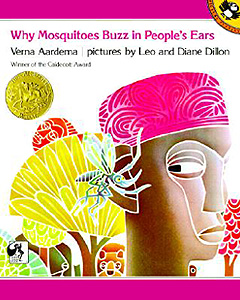
Pourquoi Tales

After reading countless Fairytales and Folk Tales over the past few months, we zoomed in on a specific type of Folk Tale that explains why things happen and why things are the way they are in terms of animals and nature. Here are some examples:


These kinds of Folk Tales are called Pourquoi tales, literally meaning "why" in French. 
After reading a few examples, we began brainstorming kinds of Pourquoi tales we could write: why a cheetah is the fastest animal; why an elephant has a trunk; why a giraffe has a long neck; why a rainbow is colorful; why the sky is blue... our list goes on! With the help of many graphic organizers, students have been writing their own Pourquoi tales for a few weeks, and they are coming out beautifully. The details are creative, the characters are developed well, and the structure of this writing has been strong. We cannot wait to share them with you!

(Disclaimer: I had hoped we could send these home before February vacation but the wrath of Mother Nature has put quite a damper on our Pourquoi publishing. They will be sent home as soon as we are finished after break!)


How are we the same? How are we different?

The 2 main guiding questions for our China unit of study have been
How are we the same?
How are we different?

By experiencing some of the cultural traditions of children, students, and families in China, we have been able to compare what we know about our day to day lives with theirs. We first began learning about typical meals of students in China by viewing photos and reading descriptions. Ask us about some of the things on the menu!

Our favorite part was definitely when we had the chance to use chopsticks during snack. We watched a video showing us how to use them properly, and then tried it out ourselves!


Last week we also began practicing how to say numbers 1-10 in Chinese! We listened to a silly rap song that includes auditory and visual cues in a catchy rhyming pattern. We'll be continuing to listen and practice. After reading the book My Pet Dragon that aligns Chinese symbols with illustrations, we painted Chinese characters with black watercolor paints, even making up our own. We learned that although the symbols in our language may look much different, we all use them in the same way.


Tuesday, January 20, 2015

Performing Fairy Tales

What better way to learn about familiar Fairy Tales and Folk Tales than acting them out yourself? Beginning last week we read, reread, and reread some more some more 3 Fairy Tale plays perfect for a group of second graders. During reading, this gave us an opportunity to focus heavily on reading our lines with fluency: does your voice change with your character? Should you sound sad or excited here? How would you say that line if you were your character? Check out these awesome actors and actresses hard at work!


Martin Luther King, Jr. Activity

Last Friday we sat down together to talk about the reason for the long weekend. It's more than just a nice break in January! We remembered that we celebrate Martin Luther King Jr.'s birthday on this day. We discussed what we knew about MLK Jr. - he was accepting of people, he helped people of all skin colors, he made a very famous and very important speech... the list goes on. After our discussion, I told the class that while I read aloud Martin Luther King Jr.'s Birthday, they could take the paper and crayon I was handing out to them and color a beautiful picture. Sounds relaxing, right? Well, there's a catch. Here's what they got...


It took so much willpower (on my part) not to call on the hands that were shooting up in the air as soon as they got their materials! A few minutes into the story, I looked up at 18 blank stares and 18 "blank" pieces of paper. "Where are your pictures?! I told you to draw a beautiful picture!". The muttering was beginning to grow louder until one brave soul cried out "Miss Guerriero, I can't use this black crayon on black paper!" They decided, almost unanimously, that they should switch colors with a friend. What ensued was nothing short of special - not a voice could be heard, only the work of 18 artists drawing the beautiful pictures I had asked for earlier.


When I finished the book, we talked about why I asked them to color with the same paper and crayon, and what this had to do with MLK Jr. It was one of the best group discussions of the year. Ask your child about it at home!


Thank you to herdingkats.blogspot.com for the inspiration!


Friday, January 9, 2015

We're off to China!

Onward we go to another country! On Wednesday we packed our bags and headed East to Asia, landing in the third largest country in the world - China! We checked out photographs, maps, the flag, and important structures in China to get our brains ready for this study. To kick off the unit, we participated in a "question carousel". Students were split into groups of 6, and each had one minute to answer a specific question (or check out a nonfiction China book). At the end of the minute, the chime signaled a rotation to a new question.


1. What do you think you know about China?
2. What do you want to know about China?
3. What would you tell people in China about where you live?
4. What things do you think come from China?
5. Why is it important to know about different places?


The answers we shared were really thoughtful and reflective. Here are some examples...

1. I know why the Great Wall of China was built. I know there are a lot of pandas and bamboo.
2. How many people live there? How many factories do they have there?
3. I would tell them about our beautiful ocean.
4. China makes waving kitties and lots of food!
5. You need to learn about other places. You will grow up and be smart.


To add an element of inquiry to this Social Studies unit, we will continue to explore and research questions that we have. We might be able to answer some, and other wonderings may be sparked too. I'm looking forward to seeing where this takes us! Some of the most authentic learning happens when we are able to guide our own discoveries and research.

Zài jiàn!


Monday, December 22, 2014

Scientist of the Week

I love this quote by Wendell Phillips: "Seldom was any knowledge given to keep, but to impart...". In the profession of teaching, as cliche as it may sound, I am a teacher and a learner every day. My students' creativity, ideas, and inquiry open my mind in new ways. To support this notion that students are also teachers, we have officially begun Scientist of the Week in Room 9! Each Friday, one scientist is chosen. He or she takes home the Scientist bag complete with the Scientist's journal, a lab coat, safety goggles, a magnifying glass, and an experiments book. 

This person has one full week to choose an experiment (from the book/websites provided, or an idea of your own), practice the experiment at home, and complete a lab report. On Friday, the student performs their experiment for the class! "Assistants" are welcome to attend the experiment, but the student must do the experiment from start to finish without any help. After the experiment is performed, another scientist is chosen!

Our very first scientist showed us an exciting experiment using electricity! By connecting wires and batteries, she made a fan fly across the classroom - it was awesome. Bravo!!


Our second scientist used the electricity from a wire and a large battery to pick up paperclips. I've never seen this experiment done before - very cool!


Our next scientist made a tornado using two connected water bottles. This one is fun to try at home!


This next scientist used household items to create a catapult! She brought a few items to launch. We had a great time at the end of the day exploring the catapult further!


This week's scientist used a yard stick, washers, some cool neon paint, and a black light to show us how the length of the different strings, when pulled at the same time, can make a moving "S" shape. We loved the extra colorful touch!


This scientist showed us how water can travel down a string from one cup to another without dripping. We learned that only thick string will work for this experiment! Thin thread, she told us, doesn't make the water stick.


This scientist showed us how our brain perceives fast-moving images. The two images, when spun between her hands, were viewed by us as one single image. Very interesting!!


In keeping with brain experiments, this scientist showed us how our brain can play tricks on us! When helpers watched the spinning CD for 30 seconds and then looked at a blank wall, their eyes still saw a spinning circle! We even got a chance to use these at the end of the day!


This scientist showed us how the properties of milk and soap combine to produce swirly effects. When dropping small amounts of soap into a container filled with milk, and droplets of food coloring, the results are beautiful! This experiment is a fun one to try at home.


This scientist used static to show us how to move objects across a table! By rubbing a balloon on his head, he created static, which he then used to "push" the aluminum can across the table. We had some very messy-haired, true "mad scientists" when we tried this afterwards!


This week's scientist showed us how air forces can make a balloon fly! We even answered a few questions in the moment by changing the direction of the string.


 This scientist used a laser beam to show us how light travels through water AND plastic! We discovered that some of the light curves with both water and plastic, following their paths. 


This scientist showed us how air pressure inside basketballs changes how high the ball will bounce. Using tape to mark the peak of the bounce, he showed us that the bounces were pretty close in height depending on the amount of air pressure!


This week's scientist used simple ingredients - water, eggs, and salt - to show us how salt can float an egg in a cup of water! We all were wondering just how much or how little salt is needed to float an egg. We hope you try this one at home!